Mini Program vs Native App vs H5: Choosing Your China Front Door
Mini Program, native app, or mobile web: how the three storefront options compare on install friction, discovery, payments and cost — and when each wins.
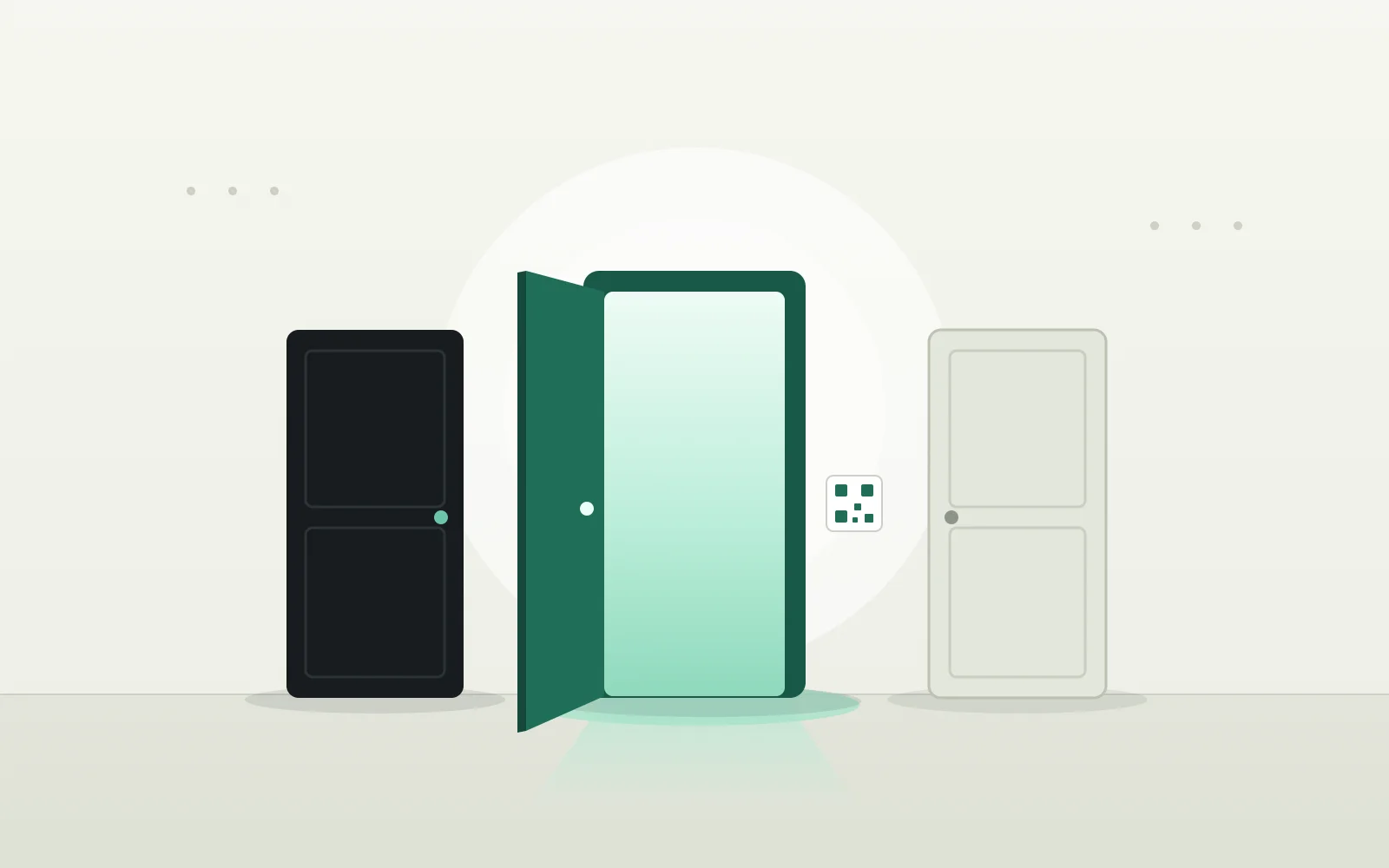
For an overseas brand, "entering China" eventually stops being a marketing question and becomes an architecture one: when a Chinese customer wants to browse, check prices or book on their phone, what exactly do they open? In most markets the answer is settled — a mobile site, plus an app if usage justifies it. China adds a third option, the WeChat Mini Program, and it shifts the trade-offs enough that the familiar defaults are usually wrong. Here's how the three front doors — Mini Program, standalone native app, and mobile web (H5) — compare on install friction, discovery, payments, and the cost of building and keeping each alive.
The short version: for most overseas consumer and tourism brands, a WeChat Mini Program is the right first door — nothing to install, payments built in, and it lives inside the app where many Chinese purchase decisions already get made. H5 is the fast, low-cost bridge; a standalone app is rarely justified until proven, high-frequency demand outgrows what a Mini Program can do.
The three doors, briefly
Mini Program (小程序). A lightweight application that runs inside WeChat rather than sitting on the phone's home screen. It opens instantly from a search, a shared card in a chat, or a scanned code — no app store, no download. Alipay and other super-apps run their own equivalents, but for most overseas brands the WeChat version is the one that matters. (WeChat Official Accounts — a publishing and messaging channel, not a storefront — are outside the scope of this comparison.)
Native app. A standard iOS or Android application, distributed through app stores and installed on the device. Full control, the highest technical ceiling, and — in China — a distribution obstacle course.
H5. Chinese industry shorthand for the mobile web: a responsive site opened in a browser, or more often inside the webview of another app.
Install friction: the dimension that decides most cases
Start with the hardest truth about native apps in China: before your customer can use one, you have to get it onto their phone, and every step of that journey works against a foreign brand.
On iOS, apps offered on the China App Store are typically required to complete a domestic regulatory filing before listing. On Android, Google Play is effectively absent, and distribution runs through a patchwork of device-maker stores, each with its own review. That's just the supply side; the demand side is worse: you're asking a consumer who has never heard of you to install an app they may use twice — once to research a trip or a treatment, once to book it. For considered, low-frequency purchases — exactly what most overseas tourism and consumer brands sell — that ask rarely lands.
H5 removes the install but replaces it with a different friction: the browser is simply not where Chinese mobile life happens — users rarely type URLs, and browsing mostly runs through in-app webviews.
Mini Programs remove the install step entirely. A customer taps a shared card or scans a code, and your storefront is open in seconds, inside the app they already use all day. Used Mini Programs also persist in a recently-used drawer — a lightweight return path H5 never gets.
Discovery: how each door gets found
Discovery is where China's walled-garden structure dominates the comparison.
Chinese consumer attention is concentrated inside a handful of super-apps and content platforms, and those platforms guard their walls: links out to the open web are often restricted, degraded or simply unclickable. A mobile website you can freely link from Instagram or Google is, inside the Chinese ecosystem, a second-class citizen.
A Mini Program, by contrast, is a first-class object inside WeChat. It can surface in WeChat search, travel through conversations as a rich, tappable card, and open from a scanned QR code — a code on a menu or a partner's counter takes a curious customer straight into your storefront, no URL or store listing required.
Native apps have the weakest discovery story: Chinese users rarely browse app stores for foreign brands they haven't heard of, and paid installs are an expensive fix. H5 has the broadest reach on paper — anything can link to it — but the places Chinese consumers actually spend time are precisely where those links work worst. Its strength lies outside the walls: search engines, overseas platforms, and any customer checking that you exist.
Payments: where conversion is won or lost
Getting WeChat Pay and Alipay to actually accept a payment from an overseas merchant is its own topic, with its own registration and setup questions — not covered here. Assume that groundwork is done, and the question narrows to something simpler: once a wallet is connected, how does each front door get the customer to it?
Inside a Mini Program, WeChat Pay is native: the payment sheet slides up in the same context the customer has been browsing in, making checkout the smoothest of the three in practice.
On H5, it depends where the page is opened: in an external browser, wallet payments commonly run through redirect flows — out to confirm, then back — while inside WeChat's own webview that route is blocked, and an H5 page needs a separate in-app payment setup. Workable, but more moving parts than the native sheet.
In a native app, both wallets integrate via SDKs and the result can be excellent — but notice what happened: you built and distributed an entire application to get a checkout the Mini Program gives you natively.
Cost: the build, and the long tail after it
Exact figures vary with scope, so compare the shapes of the three cost curves instead.
H5 is the cheapest door to open and to keep open: one responsive codebase, often reusing your existing web stack. The caveats are operational — hosting outside the mainland brings cross-border latency, hosting inside it carries licensing requirements — but the engineering bill is the smallest of the three.
A Mini Program sits in the middle. One codebase, one platform, and a component framework that keeps builds contained. You'll need a verified entity to register, and releases pass through WeChat's review — but there is no second operating system to support and no install campaign to fund.
A native app is the most expensive door by a wide margin — and the build is not the expensive part. Two platforms to develop and test, China-specific store compliance, ongoing OS churn — then the real line item: the marketing spend required to drive installs, which for an unknown foreign brand can easily exceed the build itself. An app is not a purchase; it's a standing commitment.
Side by side
| Mini Program | Native app | H5 / mobile web | |
|---|---|---|---|
| Install friction | None — opens in a tap | High — store download, China store hurdles | None, but lives in the browser |
| Discovery in China | Native to WeChat: search, shared cards, QR | App store search; paid installs | Weak inside walled gardens, strong outside them |
| Payments | Native WeChat Pay sheet | Wallet SDKs to integrate | Browser redirects; separate in-app setup |
| Cost shape | Moderate; one codebase, one platform | Highest; two platforms plus install marketing | Lowest; reuses your web stack |
| Return path | Recently-used drawer, service messages | Push notifications — if installed | Bookmark or memory |
| Ceiling | Platform rules and size limits | Highest — full device access | Browser and latency limits |
When each door wins
The Mini Program wins when your buyers are Chinese consumers making considered purchases — travel, hospitality, dining, retail, services — and your demand arrives through recommendations and social content. That describes most overseas brands entering the market — which is why it's the sensible default: browsing, booking and payment under one roof, with no install standing between interest and checkout.
H5 wins the opening move when you need presence fast, or one build that serves customers beyond China too: a bilingual landing and booking layer reachable from anywhere is a legitimate first step, and it stays useful alongside a Mini Program for the contexts WeChat doesn't reach. Its role is bridge and companion, though — treating H5 as the endgame tends to mean conceding conversion inside the ecosystem where your Chinese customers actually are.
A native app wins late, not early. High-frequency usage, heavy device features, or an existing global app that needs a compliant China build — those are app-shaped problems. If your customers will realistically open it every week and you can fund the installs, it earns its place. Few overseas brands meet that bar in their first China year.
The doors aren't mutually exclusive, either: a common mature setup pairs an H5 layer for the open web with a Mini Program for the WeChat funnel, adding an app only if usage data ever demands it. What matters is sequencing — and that is where our process starts, before any code is written.
Where CN1X fits
CN1X designs and builds WeChat Mini Program storefronts for overseas brands — payments connected, taken through WeChat review — and runs the Xiaohongshu and Douyin marketing that fills them; here's the full scope of what we build and operate. Unsure which door fits your product? Describe what you're planning and we'll give you a straight answer.
More from the blog

Korean and Japanese Operators Selling into China
A short flight changes the customer. What long-haul advice gets wrong for operators in Korea and Japan, and which barriers you have already cleared.
What a Month of Running the Account Actually Looks Like
"What is the ongoing commitment" is really a question about calendars. Where the hours land, who they land on, and which parts cannot be batched.

What You Supply Before a Mini Program Build Starts
The quote is signed and then three weeks pass with nothing visible happening. Almost always the build is waiting on things only you can hand over.