Kiwi Driver Tours & Transfers: Bringing New Zealand Private Tours into WeChat
Case study: how a New Zealand private-transfer and tour operator opened a direct, bookable channel to Chinese travelers — and why their category is a perfect fit for a WeChat Mini Program.

The clearest way to show what we do is a real engagement. Kiwi Driver Tours & Transfers is an Auckland-based private transport and tour operator — and the more we worked with them, the more convinced we became that their corner of tourism is exactly where a WeChat channel pays off fastest. This post is about why, what we built together — and how to open the result on your own phone.
The short version: Kiwi Driver Tours & Transfers runs private transfers and custom tours across New Zealand and Australia — a category Chinese independent travelers already love but couldn't easily book. We changed that together: a WeChat Mini Program storefront — now live — and a China-side funnel to feed it.
Who they are
Kiwi Driver Tours & Transfers is a private-first operator: one-way and airport transfers, city-to-city trips, custom itineraries, multi-day road trips and luxury sightseeing — built around comfort and a personal touch rather than 50-seat coaches. Their coverage is unusually broad for a private operator: tours organized across the 21 New Zealand regions in their catalogue, from Northland down to Stewart Island, plus eight Australian states and territories. Signature products include the Hobbiton Movie Set tours from Auckland, in both small-group and fully private formats.

Their English-language presence is in good shape: a booking-enabled website, reviews, an FAQ, active Facebook, Instagram, YouTube and LinkedIn channels, and a named human being — John — you can actually reach. For Western travelers, the funnel works.
The gap: the right product, invisible to the right market
Here's what made this engagement such a textbook case. Private driver-guided touring — 包车游, "charter travel" — is arguably the default way affluent Chinese independent travelers do New Zealand and Australia. Small family groups, flexible itineraries, no rigid coach schedules, a driver who handles the logistics: the product Kiwi Driver Tours & Transfers already sells is precisely what this market searches for.
But before our partnership, nothing about that product was visible or bookable where Chinese travelers actually plan:
- The site and socials were English-only — and on Western platforms Chinese travelers barely use.
- There was no presence on Xiaohongshu or WeChat, where the entire trip-planning journey happens.
- Checkout meant a Western booking flow — no WeChat Pay or Alipay, the rails Chinese consumers actually pay with.
That combination — strong product, zero China-side surface — is the single most common profile we see among overseas tourism operators. The demand exists; the channel doesn't.
What we built — and run — together
Our engagement follows the same end-to-end playbook we bring to every tourism client:
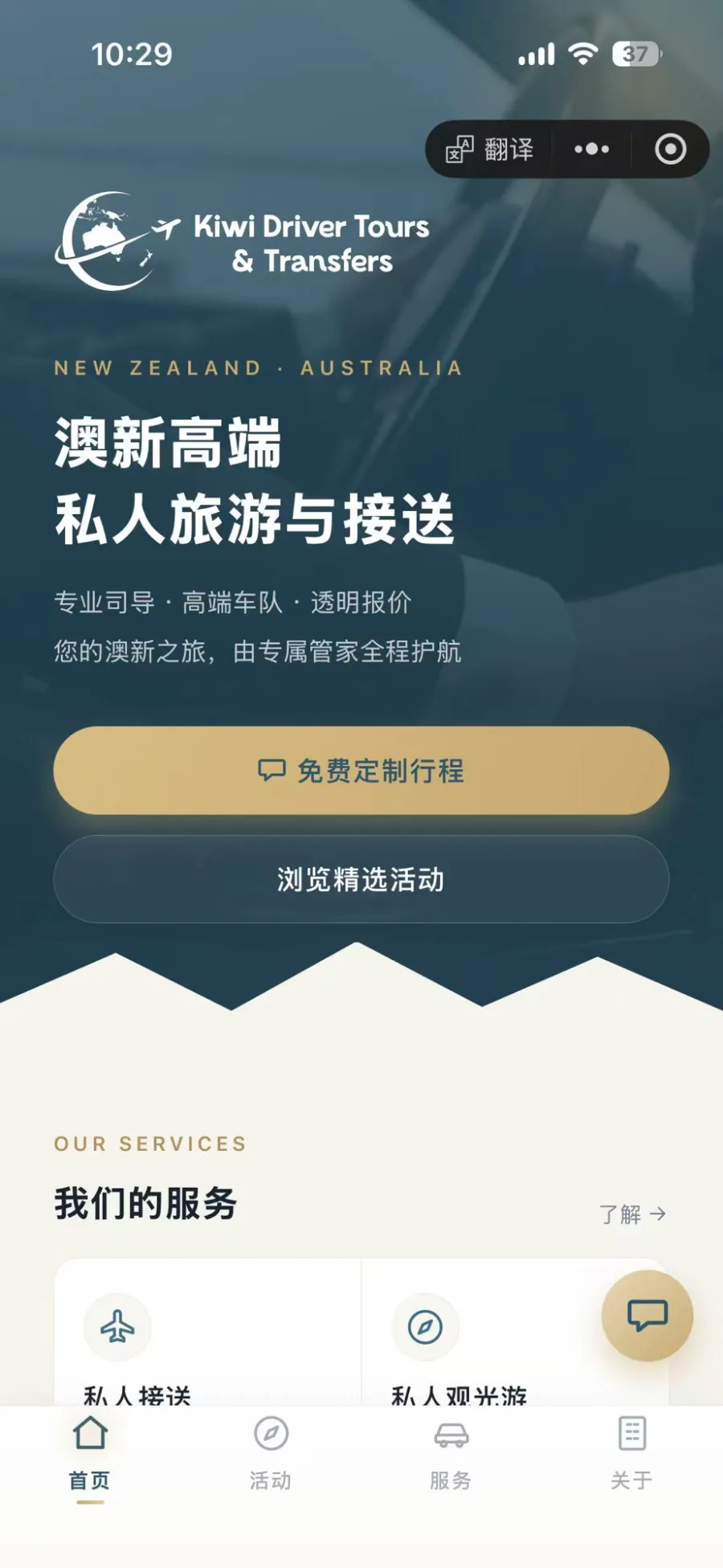
A WeChat Mini Program storefront. The operator's transfers and tours, repackaged for how Chinese travelers actually buy: clear itineraries, what's included, private-group logic, Chinese-language UX — not a translated website, but a native storefront that opens instantly from a QR code or a share card passed into a family group chat. (New to Mini Programs? Start here.)
A wallet-first booking path. The storefront is designed around WeChat-native checkout, so paying doesn't mean pulling out a foreign credit card form in a foreign language.
The China-side funnel. Xiaohongshu is where "新西兰包车" (New Zealand private charter) gets researched; share cards and QR touchpoints close the loop back to the Mini Program. CN1X operates this side entirely, so a lean New Zealand team never has to learn WeChat's back office.
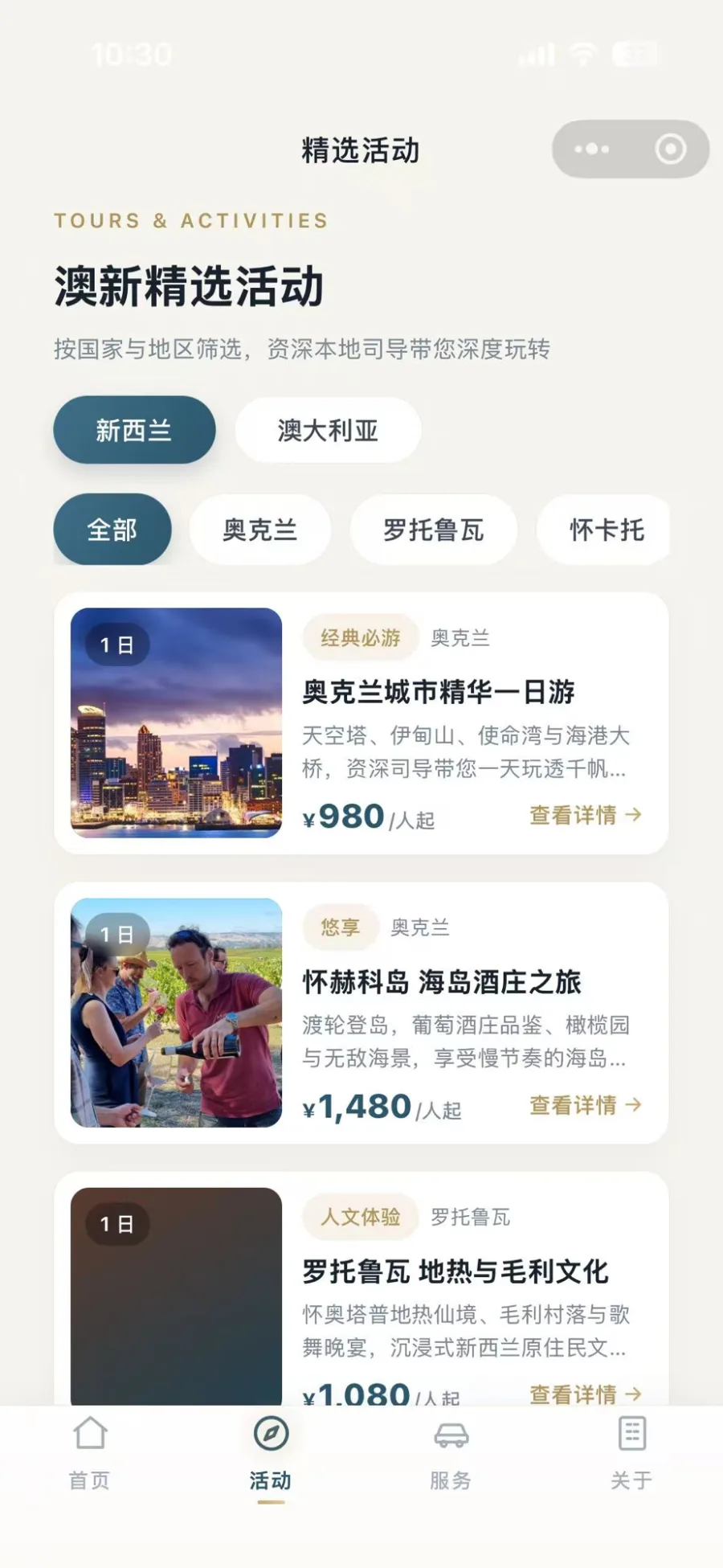
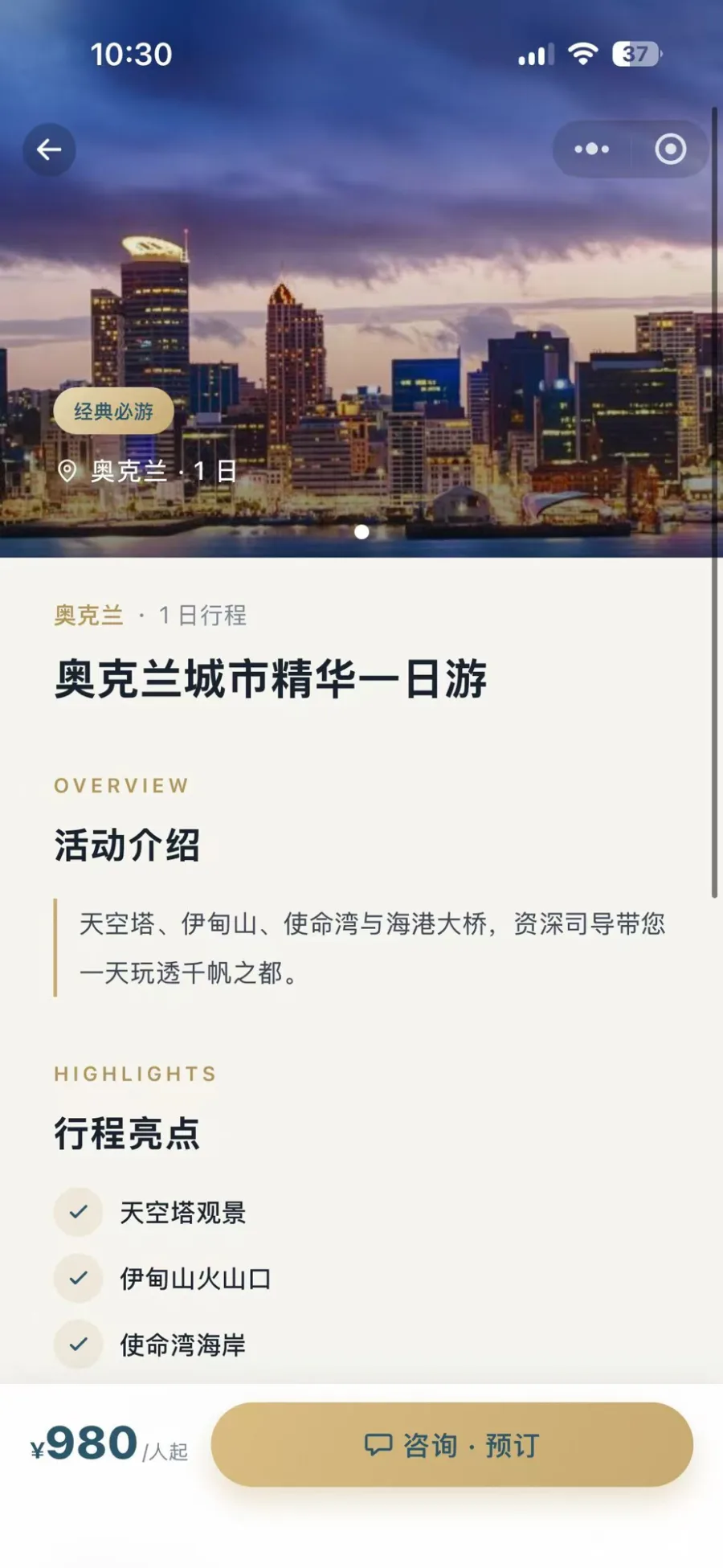
Here's the built product — the live storefront home, the browsable tour catalogue with region filters, and a tour page with WeChat-native "inquire & book":
Scan it: the storefront is live
The Mini Program is now live on WeChat. Open the app, tap the scanner, and point it at this code — you'll be inside the storefront in a couple of seconds, with nothing to download and nothing to sign up for:

(Reading this on your phone? Save the image, then open WeChat's scanner and pick it from your album — or long-press the code if you're viewing this page inside WeChat.)
That no-install jump — from a printed code, a shared card or this very page straight into a bookable storefront — is the whole argument for the channel compressed into a single gesture.
Why we won't show you a results chart (yet)
A lot of agency case studies end with a hockey-stick graph. Ours ends with a promise instead: we'll publish numbers when there are real numbers worth publishing. This partnership is young, and we'd rather show you honest milestones than decorative metrics. What we can already say is that the fit between product and channel here is as clean as this market gets — which is exactly why this is the story we chose to tell.
The takeaway for other operators
If your business looks anything like Kiwi Driver Tours & Transfers — a genuinely good travel product, strong Western presence, and no surface at all where Chinese travelers plan and pay — you're not missing marketing. You're missing a channel. That's a solvable, well-scoped problem: here's how we solve it, and here's what the first 90 days look like.
And if you'd like to talk it through against your own product, the form below reaches us directly.
More from the blog

Korean and Japanese Operators Selling into China
A short flight changes the customer. What long-haul advice gets wrong for operators in Korea and Japan, and which barriers you have already cleared.
What a Month of Running the Account Actually Looks Like
"What is the ongoing commitment" is really a question about calendars. Where the hours land, who they land on, and which parts cannot be batched.

What You Supply Before a Mini Program Build Starts
The quote is signed and then three weeks pass with nothing visible happening. Almost always the build is waiting on things only you can hand over.